












Was Wiegt Ein E Bike – Alles, was Sie über Gewicht und Fahrkomfort wissen müssen
How much does an e-bike weigh? Complete guide
One of the most frequently asked questions is: how much does an e-bike weigh? Weight affects handling, transport, and storage. Whether commuting, tackling hills, or climbing stairs – knowing the average e-bike weight helps you make the right choice. How much an e-bike weighs depends on the battery, motor, frame, and components. This guide will tell you about typical weight ranges and how they affect your riding experience.
Average e-bike weight
On average, an e-bike weighs between 20 and 28 kg, depending on the model, frame, and intended use. Lightweight e-bikes for city commuters or easy transport weigh less than 20 kg. This weight refers to the complete, ready-to-ride e-bike, including all permanently installed components.
What is included in the average e-bike weight?
The total weight of an e-bike typically includes:
-
Frame – Usually made of aluminum, carbon or steel
-
Motor – hub motor or mid-motor system
-
Battery – One of the heaviest components, often weighing 2–4 kg on its own.
-
Drive and transmission
-
Braking system (disc or hydraulic brakes)
-
Wheels and tires
-
Integrated accessories such as lights, mudguards, side stand and luggage rack
Factors that influence e-bike weight
The weight of an e-bike can vary significantly depending on its features and construction. Anyone wondering how much an e-bike weighs should be aware of the most important factors. These play a crucial role in choosing the right model for commuting, touring, or leisure riding.
Battery size and capacity
The battery is one of the heaviest components of an e-bike. Larger batteries offer greater range and longer riding time, but also increase the overall weight. Depending on the model, high-performance batteries can weigh between 2 and 5 kg. E-bikes with a particularly long range are therefore generally heavier than standard models.
Engine type and position
The motor also affects the weight. Mid-drive motors are slightly heavier than hub motors, but offer better performance and balance on inclines. Hub motors are lighter, but can slightly alter the handling.
Frame material
The frame material used has a significant impact on the weight:
-
Aluminium frames are considered the industry standard and offer a balanced ratio between stability and moderate weight.
-
Carbon frames are significantly lighter and are primarily used in high-quality, lightweight e-bikes.
Steel frames are particularly robust, but increase the overall weight and are often used in cargo or utility e-bikes.
Additional equipment and accessories
E-bikes for everyday use or longer tours are often equipped with additional features that increase the weight:
-
mudguards
-
Luggage racks and bags
-
Integrated lighting and security systems
These practical components can add several kilograms to the total weight.
Removable battery for greater flexibility
For situations like carrying it up stairs or loading it into a car, many models have a removable battery. Removing the battery reduces the weight by about 2.5 to 4 kg, which significantly simplifies transport and storage.
Typical e-bike weights by type: What you can expect
Understanding the weight of an e-bike is crucial when choosing the right model for commuting, leisure, or carrying cargo. Weight varies considerably depending on the e-bike category, frame material, motor type, and battery size. Here you'll find a detailed overview of typical e-bike weights by type:
Average e-bikes
Most standard e-bikes weigh around 20–25 kg (44–55 lbs). These models are ideal for daily commuting and general everyday riding.
|
|
|
|
|
|
Price |
€398,99 |
€458,99 |
€878,00 |
|
Motor |
250W (350W Peak) |
250W (350W Peak) |
900W |
|
reach |
65 km |
65 km |
100 km |
|
Max. Speed |
25 km/h (32 km/h) |
25 km/h (30 km/h) |
25 km/h (45 km/h) |
|
Speed Modes |
10/15/25/32 km/h |
10–30 km/h |
10–45 km/h |
|
Battery |
36V 7.8Ah |
36V 7.8Ah |
48V 13Ah |
|
suspension |
rear wheel |
Adjustable fork |
Double front fork |
|
Brake |
Disc brakes (front/rear) |
Disc brakes (front/rear) |
Mech. + E-brake (f/h) |
|
Tires |
14×1.95" |
16×1.95" |
20×4" Fat Tires |
|
charger |
42V 1.5A |
42V 3A |
54.6V 2A |
|
Load capacity |
120 kg |
120 kg |
150 kg |
|
Weight |
23.2 kg |
24.5 kg |
38 kg |
|
Dimensions (L×W×H) |
120×59×100 cm |
142×56×94 cm |
161×63×104 cm |


Trekking-E-Bikes
Trekking e-bikes designed for longer distances typically weigh 22–28 kg (48–62 lbs). The higher weight results from larger batteries, robust frame constructions, and additional equipment such as mudguards and luggage racks.
 |
|
|
|
Price |
€508,99 |
€598,99 |
|
Motor |
350W (500W Peak) |
500W |
|
reach |
90 km |
89+ km |
|
Max. Speed |
25 km/h (32 km/h) |
32 km/h |
|
Speed Modes |
6–35 km/h |
6–32 km/h |
|
Battery |
36V 10.4Ah |
36V 10.4Ah |
|
suspension |
Adjustable fork |
Front suspension fork |
|
Brake |
Disc brakes (front/rear) |
Disc brakes (front/rear) |
|
Tires |
16×2.15" |
26×1.95" |
|
charger |
42V 2A |
36V 10.4Ah / Fast charging 4–5 hours |
|
Load capacity |
120 kg |
120 kg |
|
Weight |
26.5 kg |
28.0 kg |
|
Dimensions (L×W×H) |
143×53×110 cm |
172×69×97 cm |

E-Mountainbikes (E-MTB)
Built for off-road use, these models typically weigh between 21 and 28 kg (46–62 lbs). This weight results from reinforced frames, suspension systems, and powerful motors designed for steep climbs and challenging terrain.
|
|
|
|
Price |
€565,99 |
|
Motor |
500W (250W Rated) |
|
reach |
70–100 km |
|
Max. Speed |
25 km/h (35 km/h) |
|
Speed Modes |
6–35 km/h |
|
Battery |
36V 10.4Ah |
|
suspension |
front wheel fork |
|
Brake |
Mechanically |
|
Tires |
26×1.95" |
|
charger |
36V 10.4Ah |
|
Load capacity |
150 kg |
|
Weight |
21.9 kg |
|
Dimensions (L×W×H) |
172×69×97 cm |

Lightweight e-bikes
Some lightweight e-bikes weigh under 20 kg (44 lbs), with particularly light models reaching as low as 15–16 kg (33–35 lbs). They are ideal for urban use, easy storage, and high mobility.
 |
|
|
Price |
€628,99 |
|
Motor |
250W (350W Peak) |
|
reach |
105 km |
|
Max. Speed |
25 km/h (32 km/h) |
|
Speed Modes |
6–32 km/h |
|
Battery |
36V 13Ah |
|
suspension |
Adjustable front + saddle |
|
Brake |
Disc brakes (front/rear) |
|
Tires |
26×1.95" |
|
charger |
42V 2A |
|
Load capacity |
120 kg |
|
Weight |
59.3 kg |
|
Dimensions (L×W×H) |
180×65×115 cm |
Compact and folding e-bikes
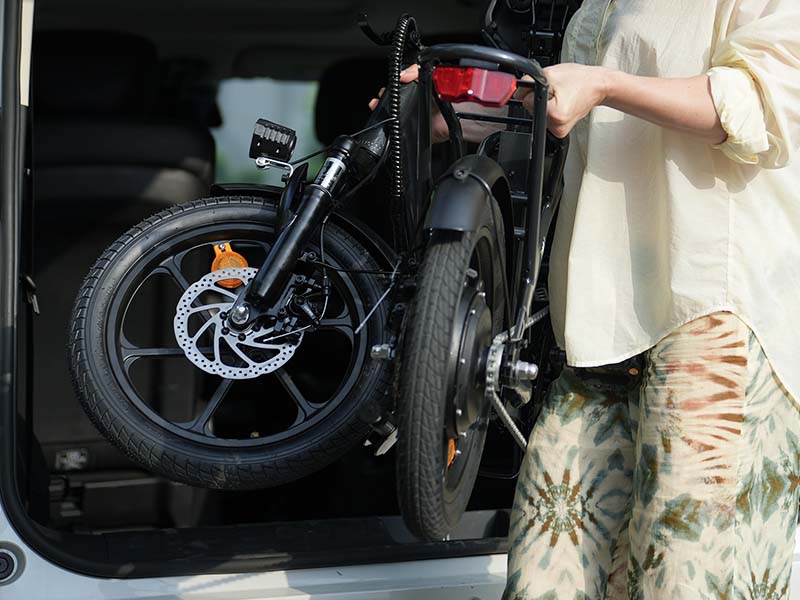
Designed for easy transport and space-saving storage, folding e-bikes typically weigh between 12 and 22 kg (26–48 lbs). This makes them particularly suitable for apartments or taking on public transport.
E-cargo bikes
Robust e-cargo bikes can weigh over 30 kg (66 lbs), some models even more than 50 kg (110 lbs). They are designed to carry heavy loads, multiple people, or extra-large batteries for long ranges.
|
|
|
|
|
Price |
€598,99 |
€565,99 |
|
Motor |
500W |
500W (250W Rated) |
|
reach |
89+ km |
70–100 km |
|
Max. Speed |
32 km/h |
25 km/h (35 km/h) |
|
Speed Modes |
6–32 km/h |
6–35 km/h |
|
Battery |
36V 10.4Ah |
36V 10.4Ah |
|
suspension |
Front suspension fork |
front wheel fork |
|
Brake |
Disc brakes (front/rear) |
Mechanically |
|
Tires |
26×1.95" |
26×1.95" |
|
charger |
36V 10.4Ah / Fast charging 4–5 hours |
36V 10.4Ah |
|
Load capacity |
120 kg |
150 kg |
|
Weight |
28.0 kg |
21.9 kg |
|
Dimensions (L×W×H) |
172×69×97 cm |
172×69×97 cm |
How e-bike weight affects usage
The weight of an e-bike, which typically ranges between 18 and 36 kg, has a significant impact on performance, handling, and everyday usability. Anyone wondering how much an e-bike weighs and what that means should know that weight isn't just a number in the technical specifications, but rather shapes the entire riding experience.
Impact on range and battery performance
Schwerere E-Bikes belasten Motor und Akku stärker, wodurch die Reichweite sinken kann. In der Praxis kann ein schweres Modell mit großem Akku ähnlich weit kommen wie ein leichteres E-Bike mit kleinerem Akku. Das Gesamtgewicht beeinflusst daher die reale Reichweite im Alltag.
Fahrverhalten und Stabilität
Schwerere E-Bikes sind stabiler auf unebenem Untergrund und bei Abfahrten, während leichtere Modelle agiler reagieren und sich besonders für Stadtverkehr und häufige Richtungswechsel eignen.
Beschleunigung und Bremsverhalten
Das Gewicht beeinflusst Beschleunigung und Bremsweg: Schwere E-Bikes brauchen mehr Energie zum Anfahren und längere Bremswege, während leichte Modelle schneller beschleunigen und wendiger bremsen.
Transport und Aufbewahrung
Für alle, die ihr E-Bike oft tragen, auf einen Träger heben oder kompakt lagern müssen, sind leichtere Modelle praktischer. Herausnehmbare Akkus reduzieren das Gewicht zusätzlich um 2–4 kg und erleichtern den Alltag erheblich.
Tipps zur Wahl des richtigen Gewichts
Die Wahl des richtigen E-Bike-Gewichts beeinflusst das Fahrerlebnis erheblich. Wer sich fragt, was wiegt ein e bike, sollte Einsatzzweck, Fahrstil und Transportbedarf berücksichtigen, um ein ausgewogenes Verhältnis von Leistung und Alltagstauglichkeit zu finden.
Einsatzzweck berücksichtigen
-
Pendeln und Stadtverkehr: Wenn Sie Ihr E-Bike täglich für den Arbeitsweg, Besorgungen oder Fahrten in der Stadt nutzen, ist ein leichteres Modell unter 20 kg besonders geeignet. Leichte E-Bikes lassen sich einfacher manövrieren, beschleunigen schneller und sind praktischer beim Tragen über Treppen oder in öffentlichen Verkehrsmitteln.
-
Offroad und Trekking: Für Mountainbike-Touren, längere Strecken oder anspruchsvolles Gelände bietet ein schwereres E-Bike zwischen 22 und 28 kg mehr Stabilität, bessere Traktion und Platz für größere Akkus mit höherer Reichweite.
Transport- und Aufbewahrungsbedarf prüfen
Wenn Sie Ihr E-Bike oft tragen oder in engen Räumen lagern müssen, ist das Gewicht entscheidend. Herausnehmbare Akkus oder Klappmodelle erleichtern das Handling. E-Lastenräder über 30 kg sind dagegen auf Transportleistung ausgelegt, nicht auf Mobilität.
Gewicht und Akkukapazität abwägen
Größere Akkus erhöhen das Gesamtgewicht, ermöglichen jedoch längere Reichweiten. Wenn ausgedehnte Fahrten im Vordergrund stehen, kann ein etwas schwereres E-Bike sinnvoll sein. Leichte Modelle mit kleinerem Akku sind wendiger, müssen jedoch häufiger geladen werden.
Motortyp und Rahmenmaterial bewerten
Mittelmotoren bringen meist etwas mehr Gewicht mit, bieten jedoch Vorteile bei Steigungen und im Gelände. Aluminiumrahmen stellen einen guten Kompromiss zwischen Stabilität und Gewicht dar, während Carbonrahmen ideal sind, wenn ein besonders leichtes E-Bike gewünscht ist.
Zubehör und Ausstattung berücksichtigen
Mudguards, racks, lights, and other integrated components can add several kilograms. Therefore, consider which equipment is truly necessary to keep the overall weight manageable.
Practical tips for handling heavy e-bikes
While e-bikes make riding significantly easier, heavier models can be challenging in everyday use. However, with proper handling and thoughtful decisions, they can be managed much more easily.
Use the push-assist function
Most e-bikes have a push assist or walk assist function. Activate this function, hold the handlebars firmly, and lift the front wheel slightly when going over obstacles or stairs. This reduces physical strain and improves control of the bike.
Lifting and carrying correctly
When carrying a heavy e-bike, bend your knees, keep your back straight, and remove the battery if possible to reduce the weight by about 2–4 kg. Correct posture protects your back and ensures greater safety while carrying.
Choose compact or foldable e-bikes
Compact or foldable e-bikes are particularly practical for city traffic. They are lighter, easier to store, and yet equipped with electric assistance, ensuring a comfortable and stress-free daily commute.
Everyday tips
Whenever possible, use ramps or elevators and store your e-bike on a lower level to avoid frequent lifting. Lightweight accessories such as mudguards or racks with low weight further improve handling. These measures also make heavier models comfortable for everyday use.
Conclusion
In summary, knowing the weight of an e-bike is crucial for choosing the right model. Most e-bikes weigh between 20 and 28 kg, with lighter versions under 20 kg and cargo or mountain bikes often exceeding 30 kg. Weight affects transport, handling, and battery efficiency. By carefully considering the frame, motor, battery, and components, you can find an e-bike that perfectly suits your riding style.
E-Scooter Kaufberater


E-Bike Kaufberater



Hoverboard Kaufberater

Ähnliches Produkt
Produktkategorie
E Scooter mit Straßenzulassung
E9 Klassisch | E9 Aufgerüstet | E9MAX
E-Bike | U3 E-Bke | U2 E-Bke
Hoverboards
H1 Hoverboard | H4 Hoverboard | H8 Hoverboard
Information
👍 Kaufratgeber | 🚴♂️ Reitsleitfaden


Hinterlassen Sie einen Kommentar